2. When You Need It
A ductless system is the right tool in a few recurring situations.
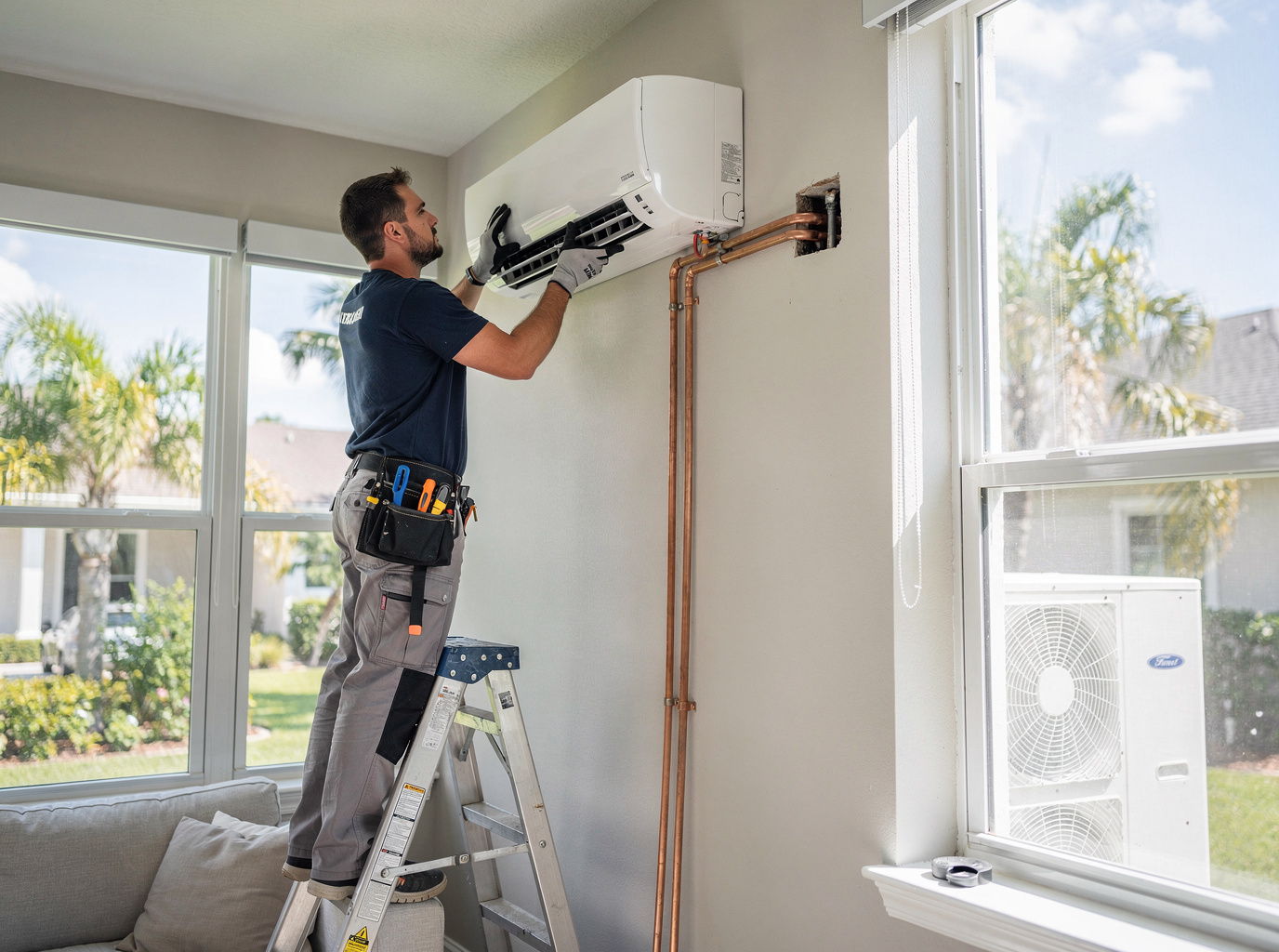
- A new addition or conversion with no duct runs. A new bedroom, bonus room or enclosed porch often has no path from the existing system, so the space stays under-served.
- One chronically hot room in an otherwise ducted home. When a single room runs warm year after year, the cause is often its distance from the air handler, a long duct run or heavy sun exposure. A ductless head can give that room its own control.
- An older home where adding ductwork is impractical. Ducts may not fit in the ceiling or floor cavities, and opening finished walls to add them can be more disruptive than the comfort it gains.
- A detached space. A workshop, studio or office over a garage is usually too far from the house system to be served well by extended ducts.
The honest counterpoint matters just as much. Where a home has sound ductwork and needs conditioning throughout, a central system is usually the straighter answer. Extending a healthy duct system to more rooms, or replacing an aging central unit with a properly sized new one, often serves the whole home more directly than adding several separate heads. Prime Florida HVAC covers that route on the Air Conditioning Installation page, and a failing central system is covered on the Air Conditioning Repair page.
A useful test is to ask whether the problem is one room, or one space with no ducts. If it is, ductless deserves a close look. If the problem is the whole house, start with the central system and its ducts.
The choice comes from the assessment of the actual spaces, not from a preference for one system type. Before any head is proposed, the assessment measures the space's heat load from sun exposure, glazing and insulation, so the head count follows the room's actual demand. Once that assessment is done, the design explains which spaces a ductless head would serve and which would be better handled by the central system. The same assessment applies across the service area, including the homes covered on the Tampa page.
3. How the Work Runs
Every ductless project follows the same six stages. The order matters, because the layout is settled before anything is drilled.
1. Assessment
The assessment looks at each space the system will serve. It records the size of each room, its heat load from glass, sun exposure and how the room is used, and how many zones the home actually needs. A room with west-facing glass carries a different load than an interior office, and the difference shapes the design. The assessment decides how many heads are needed and where they belong, and it is explained to the homeowner before the next stage begins.
2. Design
Design places a head in each zone, plans where the outdoor unit can sit with adequate clearance, and routes each line set. Condensate drainage is planned at this stage too, with slope and path worked out before anything is drilled. Sizing follows the load assessment, not a fixed rule about square feet per head.
3. Permit Step
Installing a new mechanical system is permitted work. In Tampa it follows the City's mechanical permit route, with inspection and final approval. This is new mechanical work, not a change-out, so the permit is planned into the schedule and the inspection happens at the right point in the job. Section 5 covers the route in detail.
4. Installation
Heads are mounted, line sets run through prepared openings, and drainage is fitted and tested. The outdoor unit is set, connected and charged. Each connection follows the design, so the installed system matches the plan made in the assessment and design stages. Where each line set passes through the wall, the opening is sealed and insulated so the route is closed off from the outside air.
5. Commissioning
Each zone is run and checked. Drainage is confirmed under load, so water moves away from the heads while the system is working, not only when it is off. The per-zone remotes or controls are explained so the homeowner knows how to set each room. Each head is run in cooling and heating, so its drainage and controls are proven before close-out.
6. Close-Out
Inspection is completed where the permit requires it. The homeowner is shown how to care for the indoor filters, which is a simple routine they carry out themselves. The outdoor unit's service handover is explained, including what routine service looks like and when a technician should be called. Call Prime Florida HVAC to arrange service on the outdoor unit or to describe a change in how the system is running.
4. What's Inside This Service
Four parts make up the service: the indoor heads and zoning, the line sets and drainage, the outdoor unit, and the care of systems already installed.
(a) Indoor Heads and Zoning
Indoor heads are the part of the system people see. A head suits a space that needs temperature control independent of the rest of the home. Each head is a wall or ceiling unit that conditions one zone, and its size and position follow the room. A head needs clear airflow across the room, should sit where it can reach the spaces that need cooling, and should avoid positions that leave dead corners. A single head conditions only its own zone and cannot cool a room it does not face. Multi-zone designs use one outdoor unit with several heads, each controlled separately, so a bedroom can run at a different setting from the living room. What drives the cost of this work is the number of heads, the size of each zone, mounting positions that need extra work, and how many zones the design calls for.
(b) Line Sets and Drainage
The line set is the bundle that connects each indoor head to the outdoor unit. It carries the refrigerant lines, the condensate drain and the power wiring, and it passes through a small opening in the wall. This work is needed when a head is installed, a line set is rerouted, or drainage faults appear on an existing system. Routing options include an exterior wall, an attic or chase, or a protected surface, and each changes the work. Drainage is the Florida-critical detail. Condensate is the water the head removes as it cools and dries the air. In a Tampa summer, with humidity high and August rainfall at 9.03 inches, that water must leave the head and line set. A drain that sags or is poorly supported can leak into finished walls or ceilings. Drainage is planned before anything is drilled and tested under load after installation.
(c) The Outdoor Unit
The outdoor unit is the single condenser and compressor that serves one or more indoor heads. Its siting matters for performance and for service. Siting is needed at installation and whenever airflow or access is poor. It needs clearance for airflow, a level base, and a location that lets each line set reach its head without excessive length. Common siting considerations include shade, access for service, distance from living spaces to limit noise, and protection from debris. Storm season in Tampa is a planning factor for siting. Heavy rain, wind-driven debris and flooding make a sound mounting location and a clear service path more important, and the siting follows that reasoning. This page makes no wind rating or storm-resistance claim for any equipment. The outdoor unit's cost drivers include the number of heads it connects, the mounting work required, the distance to each head and the site's access.
(d) Repairs and Care of Existing Ductless Systems
Existing ductless systems need routine care and, sometimes, repair. Indoor filters are the first item, and homeowners clean them on a regular schedule, because a clogged filter reduces airflow across the head. Coils need periodic cleaning by a technician, since dust and humidity build up on them over time. Drain blockages are common in humid climates, where algae and debris can clog the condensate path, and a blocked drain can leak. Refrigerant faults often show up as a head that runs but does not cool well, or as ice forming on the line set. A technician diagnoses these by checking the system rather than guessing from the symptom. Costs depend on the fault, the access to the head or outdoor unit, and whether the job is a cleaning, a drain clearing or a repair. For a central system's repair, see the Air Conditioning Repair page.
5. Permits for Ductless Installation in Tampa
Installing, enlarging or replacing a mechanical system regulated by the technical codes requires a permit in Tampa. A ductless installation is new mechanical work, so it follows the City of Tampa's mechanical permit route. Permitted work must be inspected and must receive final inspection approval before the job is complete. For a ductless install, the permitted work closes only after the inspection and final inspection approval of the completed new system, both indoor and outdoor.
The City's mechanical permit exemptions are narrow. They cover portable heating, ventilation and cooling appliances, portable evaporative coolers, small self-contained refrigeration systems, and replacement of parts that do not alter a system's approval or make it unsafe. A ductless installation with a line set running through the wall is not one of those exemptions.
The City's Express Permit route is a different category. The City's construction services guidance names A/C change-outs as Express Permit projects that do not require plan review. A first-time ductless install is not a change-out. It is new mechanical work, so the permit-and-inspection requirement applies, and the Express label does not.
Homes outside the City of Tampa follow their own routes. Temple Terrace runs its own Building Department, and its permit types include AC replacement; the route for any address is confirmed before work begins. Brandon, Riverview, Valrico and Seffner are unincorporated areas, where Hillsborough County Development Services issues building permits and enforces the Florida Building Code. The route depends on the address, so it is confirmed before the design is finalised.
Two further rules apply. Contractors must be licensed by the State of Florida or hold a Hillsborough County local competency card, and homeowners can check a contractor's licence against that framework. Under a homeowner's permit, the homeowner cannot subcontract electrical, plumbing or mechanical work. Call Prime Florida HVAC before work starts to ask which permit route applies to your address.
6. What Ductless Installation Costs Depend On
The cost of a ductless installation depends on the factors below. This page does not give prices, ranges or averages, because each system is designed around the spaces it serves.
- Number of zones and heads. Each head is its own indoor unit with its own installation work, so adding heads adds both equipment and labour.
- Line-set length and routing difficulty. A short, straight run through an exterior wall differs from a long route through finished spaces or across several floors. Each line set's length and route from the outdoor unit, and the wall construction it passes through, both count.
- Electrical work. Both units need power, and the amount of new wiring and the capacity of the existing electrical service affect the work.
- Outdoor unit siting. A location with a level base, clearance and easy service access is simpler to set up than one that needs added mounting work.
- Drainage. A simple gravity run differs from a space that needs a pump or a longer path to a safe drain point.
- Access and finishes. Finished walls and ceilings, and high head placement, add time to the work.
Design follows the assessment of the actual spaces. The assessment is explained before work proceeds, so the homeowner knows what the design includes and why. Central installation has its own cost factors, which are covered on the Air Conditioning Installation page. Call Prime Florida HVAC to talk through the assessment for your space. The design is set from that conversation, not from a number given in advance.
7. Questions People Ask
Can one outdoor unit run several rooms?
Yes. A multi-zone system connects one outdoor unit to several indoor heads, each with its own line set. Each head conditions its own zone and is controlled separately, so one bedroom can run at a different setting from the living room. The number of heads an outdoor unit can serve is set by the system design, which depends on the zones, the heat load of each room and the siting of the unit. A single head does not condition more than its own zone, so the design counts the rooms that need coverage and places the heads accordingly.
Does a ductless system handle Florida humidity?
A ductless head dehumidifies as it cools. Moisture in the air condenses on the coil and drains away through the condensate line, so the system removes water from the room as well as heat. That makes drainage the critical detail in Florida. The drain must be sloped, supported and tested under load so the water leaves the head reliably through long, humid summers. This page does not make performance statistics about humidity removal. How dry a given room stays depends on its size, sun exposure, air sealing and the design of the system.
Do I need a permit to install a mini-split in Tampa?
Yes, in the City of Tampa. Installing a new mechanical system is permitted work and follows the City's mechanical permit route, with inspection and final approval. The City's mechanical exemptions cover portable appliances, portable evaporative coolers, small self-contained refrigeration and replacement of parts that do not change a system's approval or safety. They do not cover a ductless installation. The Express Permit route applies to A/C change-outs, and a first-time ductless install is not one. Homes in Temple Terrace and the unincorporated county areas follow their own permit route.
Ductless or central air for an addition, how is the choice made?
The choice comes from an assessment of the addition. If the addition sits near sound ductwork with room to extend it, and that system serves the rest of the home, a central extension is often the more direct answer. If the addition has no duct path and extending ducts is impractical, a ductless head can serve the space without new ducts. The decision also weighs the space's heat load, how many rooms need conditioning and the existing system's condition. Neither system is chosen in advance. Central installation is covered on the Air Conditioning Installation page.