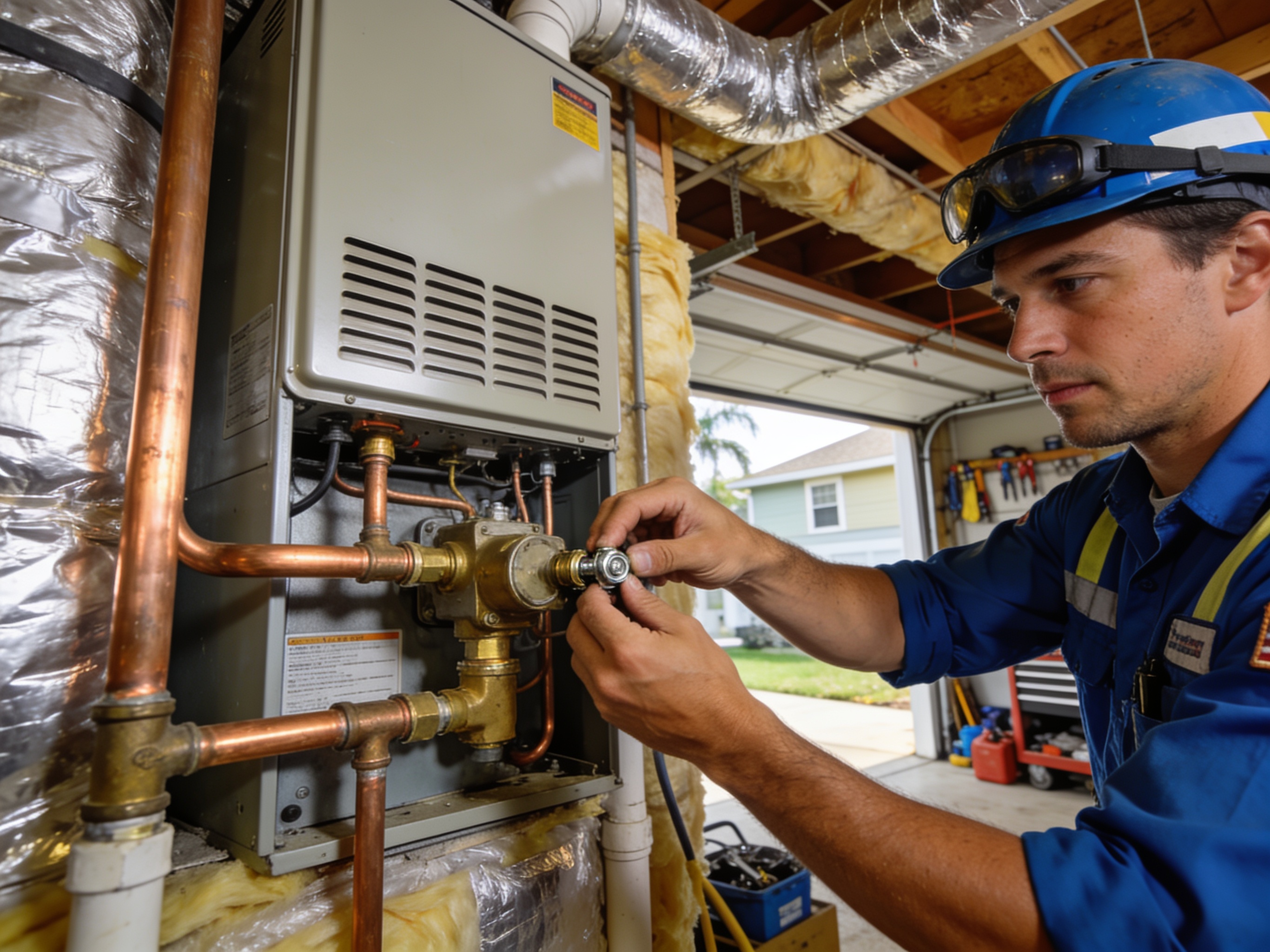
2. When You Need Heating Installation
Heating installation usually comes up for one of four reasons. Each one carries a different decision.
A heating failure that repair cannot sensibly fix. When heating stops working, the first question is whether a repair will restore the system for a reasonable time. Sometimes it will. Sometimes the cost of the repair, the age of the equipment, or the number of faults points toward replacement. The honest fork between repair and installation is covered on the Heating Repair page. If a repair is no longer sensible, the heating side moves into the replacement decision.
A full system replacement. Where the cooling is also worn out, heating is usually decided at the same time. Replacing only one side can leave a mismatched heating or cooling side behind, so the two are assessed together. Cooling replacement is covered on the Air Conditioning Installation page.
A conversion from standalone electric heat. Some homes have electric resistance heat in the air handler or in wall units, and the owner wants a heat pump instead. This is a change of configuration, not a formula with a set saving. The new system is chosen for how the home is used and for what the existing ductwork and electrical service can support. Heat pump detail is on the Heat Pump Services page.
A new addition or converted space. A room added to the house, or a garage or converted area, can have its own heating need that the existing system does not reach well. In some cases a ductless mini-split, described on the Ductless Mini-Split Systems page, is a better fit than extending the ductwork. The decision depends on the space and the existing equipment.
Planning before the season. Faults tend to show up on the first cold night. In Tampa, the average first night below 60°F falls on October 19, based on NOAA NCEI 1991–2020 normals as published by NWS Tampa Bay. A heating system that has not been checked since the last winter may fail when it is first asked to work. Installations planned in advance are calmer than ones made on the coldest night of the year, when the home has no heat and the owner has fewer options.
If you are thinking about heating now, before the first cold night, describe the system you have and any trouble it has been giving. Call Prime Florida HVAC to talk through the options for the home before the weather turns.
3. How the Work Runs
Every heating installation follows the same six steps, whatever the equipment. The order matters, because each step depends on the one before it.
Step 1. Assessment
The installer looks at the existing equipment, the ductwork, the electrical capacity available for auxiliary heat, and the home's real heating requirement. This is where the honest picture of the home is built. Assessment also records what is working, what is not, and what the homeowner has noticed about comfort, so the decision starts from the building and not from a catalogue.
Step 2. System decision
The choice between a heat pump, a standalone furnace and a combined replacement is made on the home's configuration and use. A heat pump heats and cools with the same equipment, so it suits a home that needs both. A standalone furnace heats only and is chosen where the home's configuration or existing equipment calls for it. The decision is explained in plain terms before anything is ordered. Heat pump depth is on Heat Pump Services.
Step 3. Sizing
Sizing is matched to the heating and cooling loads together where the system is combined. A Florida home is never sized on heating alone, because the same equipment has to cool the home through a long season. Undersized equipment struggles on the hottest afternoons, and oversized equipment cycles on and off without running long enough to dry the air well. Sizing is calculated from the home, not estimated from floor area alone.
Step 4. Permit
The permit step follows the route for the home's location. A heating change-out on a combined system in the City of Tampa follows the same change-out route as a cooling change-out: an Express Permit project that does not require plan review and ends in a final inspection. Section 5 covers the detail.
Step 5. Installation and commissioning
The equipment is set and connected to the ductwork. Auxiliary heat is wired, tested and checked for sequencing. Controls are configured for changeover between heating and cooling. The installer runs a full heating cycle and verifies the result. On a heat pump, the defrost behaviour is checked as well, so the homeowner knows the system clears frost correctly in cold weather. The first heating cycle is run with the homeowner present, so the normal sounds, defrost behaviour and auxiliary-heat operation are explained to them in full before close-out.
Step 6. Close-out
The inspection is completed and documented, and the homeowner receives a walkthrough of the controls. The walkthrough covers how the thermostat changes between heating and cooling and what auxiliary heat behaviour to expect on a cold night or during a defrost. The homeowner leaves knowing what the system is doing and why.
4. What Is Inside This Service
Four parts of the work shape how a heating installation performs. Three of them decide how the system behaves on the coldest nights and in the humid months.
(a) The system choice: heat pump, electric furnace or gas furnace
A heat pump moves heat rather than making it from fuel. In heating mode it draws heat from the outdoor air and delivers it indoors, and in cooling mode it reverses that path. An electric furnace produces heat with electric resistance elements and is usually a heating-only unit. A gas furnace burns gas to heat the air and is present in some Florida homes where a gas supply exists. The choice is made from the home's configuration: whether it already has ductwork and an air handler, whether the cooling is being replaced at the same time, which fuel and electrical service are available, and how the home is used. Cost follows the equipment type, whether cooling is replaced too, and the fuel and electrical service in place. The reasoning is explained at the assessment stage, before any equipment is chosen.
(b) Auxiliary heat: strips, sequencing and cold nights
Auxiliary heat, often called emergency heat, is a set of electric heat strips that support a heat pump. They run when the heat pump alone cannot meet the demand, such as on the coldest nights, and during defrost, when the outdoor coil briefly reverses to clear frost. In a heat pump installation, the strips are sized to the equipment and home, wired to the air handler, and sequenced to come on only when needed. Correct set-up decides how the whole system behaves on cold nights. Strips that are oversized or poorly sequenced run more than they should. Strips that are undersized leave the home short of heat when the heat pump is struggling. The number and capacity of strips, and the control set-up they need, drive the cost. The set-up is tested at commissioning, and the homeowner is shown what to expect when the strips come on.
(c) Ductwork and electrical capacity
Ductwork decides how much of the new heating reaches the rooms. Sound ductwork can often be reused. Where it is leaky, undersized, crushed, disconnected or poorly sealed, the installation includes correcting it, because new equipment cannot deliver its rated performance through a damaged duct system. Duct inspection is part of the assessment. Electrical capacity matters for any system that uses electric heat. Auxiliary strips and electric furnaces draw significant current, so the electrical panel and the circuits feeding the equipment must be able to carry the new load. Where they cannot, the installation includes the electrical work needed to supply it, carried out under the permit route. The cost of that work depends on the panel, the distance to the equipment and what the existing wiring can take, which is why the assessment checks it before equipment is ordered.
(d) Permits and inspection
Permits and inspection describe the route a new heating installation follows. The route applies to any new system installation, not to part-level repair. In the City of Tampa, a heating change-out follows the same Express Permit change-out route as an air conditioner change-out, with no plan review and a final inspection. Permitted work must be inspected and receive final inspection approval. In unincorporated Hillsborough County, permits run through Hillsborough County Development Services, and Temple Terrace runs its own Building Department. Homes outside Tampa therefore follow their own jurisdiction's steps. What drives the permit side of the cost is the permit route for the address, the jurisdiction's steps and the scope of the installation. The area pages carry the detail for each place, and the assessment confirms the route before any work is scheduled.
5. Permits for Heating Installation in Tampa
In the City of Tampa, air conditioner change-outs are Express Permit projects that do not require plan review. A heating change-out on a combined heating and cooling system follows the same change-out route. The mechanical exemptions do not cover a system installation, so a new standalone heating system needs a permit, and the route for the specific equipment is confirmed at assessment.
Permitted work must be inspected and receive final inspection approval. The final inspection is the point at which the installation is formally closed out, and it is the homeowner's record that the work was checked.
The mechanical permit exemptions are narrow. They cover portable heating, ventilation and cooling appliances, portable evaporative coolers, small self-contained refrigeration systems, and replacement of parts that do not alter a system's approval or make it unsafe. These exemptions do not cover a system installation. A new heat pump, furnace or combined system is a system installation, so a permit applies. A portable space heater is exempt, but it is not a heating system.
Emergency repairs have their own timing. After an emergency repair, a permit application must be submitted within the next working business day. Planned heating installations follow the standard route described above.
Under City of Tampa rules, contractors must be licensed by the State of Florida or hold a Hillsborough County local competency card. Under a homeowner's permit, the homeowner cannot subcontract mechanical work. This is the framework a homeowner can check for themselves. It describes the rule that applies to any installer, and it is not a statement about any one business's credentials. Ask to see the licence or competency card, and confirm that the work is permitted and inspected.
Tampa is only one of the routes in the service area. Temple Terrace and the unincorporated county communities each have their own permitting process, and the Tampa area page explains how the City route fits alongside them.
6. What Heating Installation Costs Depend On
The cost of heating installation depends on the factors below, and each one is assessed on the actual home. This page does not give prices, ranges or averages, because the scope of a heating installation is set by the building and by the equipment that suits it.
- System type and capacity. A heat pump, an electric furnace and a gas furnace differ in equipment, connection and commissioning, and each has to be sized to the home.
- Whether cooling is replaced at the same time. A combined system is usually assessed and installed as one job, which changes the scope on both sides.
- Ductwork condition. Sound ductwork can be reused. Damaged, leaky or undersized ductwork adds correction work before the new equipment can perform.
- Electrical work for auxiliary heat. Panel capacity and circuit runs for electric strips or furnaces can add work, depending on what the existing service can carry.
- Access. The position of the indoor air handler, the attic or closet space, and the route to the outdoor equipment all affect how long the work takes.
- Permit route. The City of Tampa, Temple Terrace and the unincorporated county each have their own process and inspection steps.
The point of process that matters most is this. The scope of work follows the assessment of the actual home, and it is explained before any work proceeds. Prime Florida HVAC does not offer a figure before the home has been assessed, and the scope is set out so the homeowner can see what is included and why. To begin that conversation, call Prime Florida HVAC to arrange the visit.
7. Questions People Ask
Do most Tampa homes heat with a heat pump or a furnace?
Which system heats a home depends on its configuration. A home with a heat pump or combined system uses the same outdoor unit and indoor air handler for heating and cooling. A home with a standalone furnace has its heating installed separately from its cooling, or a furnace already in place. The answer comes from the existing equipment and how the home is set up, including its ductwork and air handler. Finding out which system the home has now shows which installation route applies.
Can the heating be replaced at the same time as the AC?
Yes, and on a combined system it is usually decided together. A heat pump or combined system delivers heating and cooling through the same outdoor unit, indoor air handler and ductwork, so replacing one side without considering the other can leave the two mismatched. Sizing is done for the heating and cooling loads together. Where only the heating side is replaced, the assessment checks whether the existing cooling side is compatible. Cooling replacement is covered on the Air Conditioning Installation page.
Do I need a permit to install a new heating system in Tampa?
Yes. A new heating system installation needs a permit, because the mechanical exemptions do not cover a system installation. In the City of Tampa, air conditioner change-outs are Express Permit projects without plan review, and a heating change-out on a combined system follows the same change-out route. Permitted work must be inspected and receive final inspection approval. Outside the City, Temple Terrace has its own Building Department, and unincorporated Hillsborough County permits run through Hillsborough County Development Services.
What is auxiliary heat, and does a new installation need it?
Auxiliary heat is a set of electric heat strips that support a heat pump. They provide backup heat when the heat pump alone cannot keep up, and they support the system during defrost, when the outdoor coil briefly reverses to clear frost. A heat pump installation in this climate includes auxiliary heat as cold-night and defrost support, and it is sized, wired, sequenced and tested as part of the install. Section 4(b) explains how it is set up.