Services
Ac Repair Tampa Fl Services in Tampa, FL
Everything we do in Tampa, explained in depth.
What we do
Ac Repair Tampa Fl Services in Tampa, FL
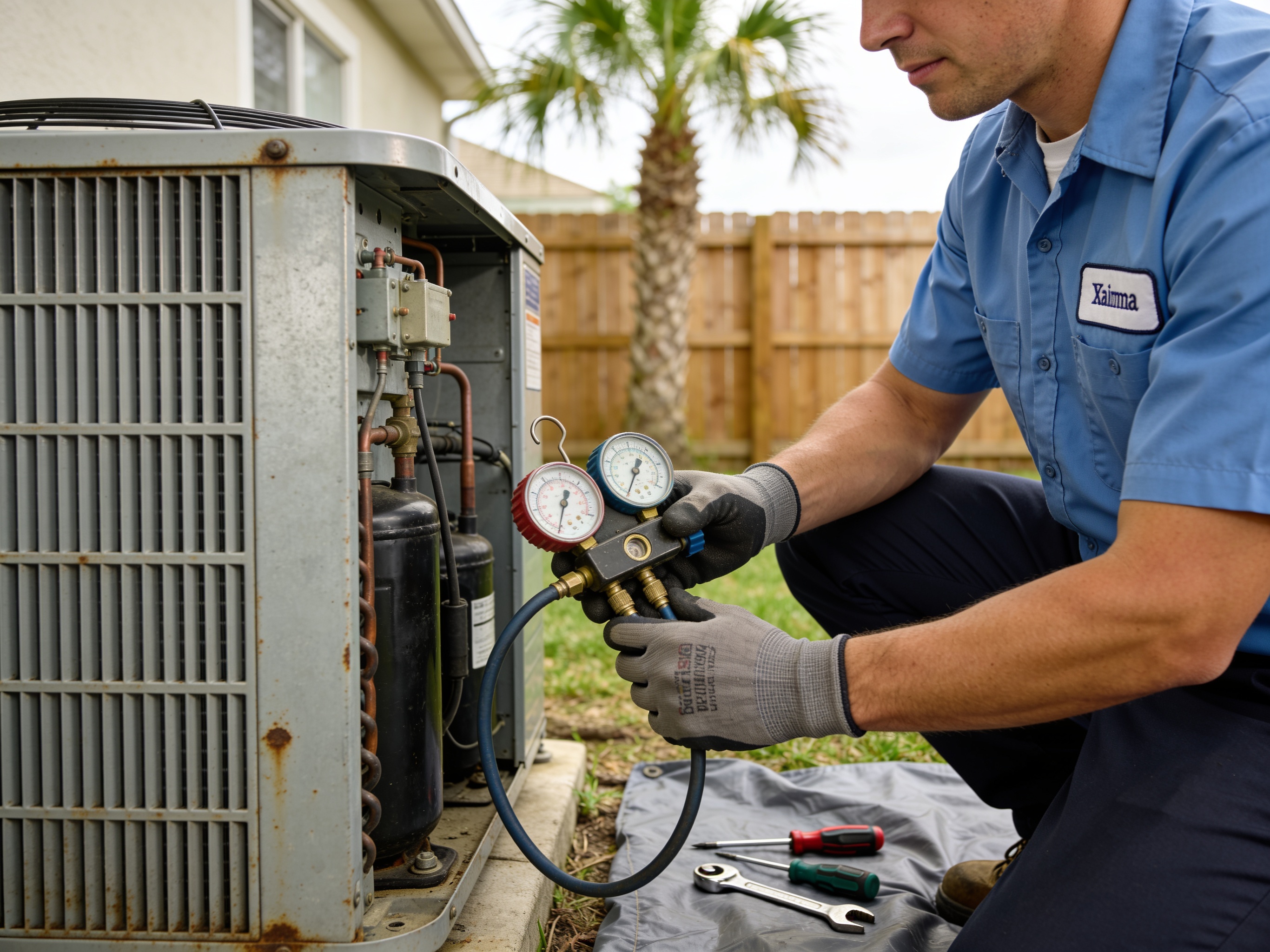
Air Conditioning Repair
Air conditioning repair is the diagnosis-led work that returns a failed or failing cooling system to correct operation. The technician finds the component or condition that has failed, corrects it, and then checks that the whole system runs as it should. Good repair is not guesswork and parts swapping. A repair that stops at the first obvious part often leaves the real fault in place, and the system fails again.
Learn more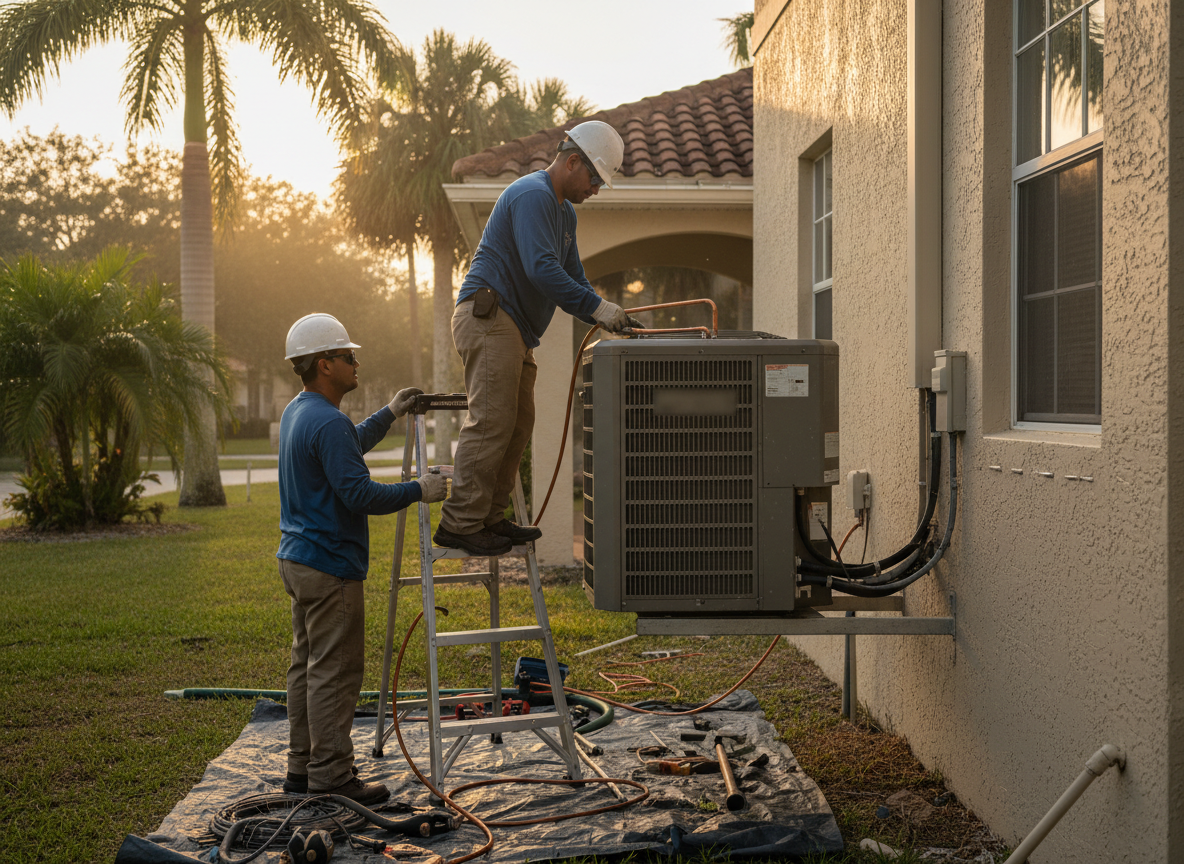
Air Conditioning Installation
Air conditioning installation is the design and fit work of putting a correctly sized cooling system into a home. It covers a load assessment, equipment selection, the physical installation of the indoor and outdoor units, refrigerant lines, condensate drainage and controls, then commissioning and the permit and inspection route that closes the job legally. At Prime Florida HVAC, installation means these steps are planned together, not handled as a simple equipment swap. A change-out is the most common form of this work in Tampa. New cooling equipment goes onto an existing home's ductwork and connection points. A first-time or conversion install is different. A home with no central cooling, or one moving from another type of system, usually needs new ductwork, new line routing and often new electrical work. The assessment, the drawings and the permit path are larger in those cases, so the homeowner should expect that planning conversation before any equipment is chosen. Tampa's climate is why sizing and drainage are load-bearing choices rather than details. The NOAA 1991 to 2020 normals for Tampa International Airport show 94.3 days a year at 90°F or more. June through September each average more than 6 inches of rain, and August is the wettest month at 9.03 inches. A system sized wrongly for the home, or a drain that cannot cope with the wet season, shows up as comfort and humidity problems every summer. Installation is for homeowners who need a new cooling system. That may be because the current unit is failing or no longer worth repairing, because a home has no central cooling, or because a replacement is planned before a breakdown forces the decision. It is also for homeowners who want to understand what the work involves and how the permit route affects their timeline. A change-out is not finished when the equipment is set in place and connected. Commissioning verifies the refrigerant charge, the airflow, the condensate drainage and the controls, and the permit and inspection route confirms that permitted work closes with final inspection approval. Those checks are what turn a set of new parts into a working system that the homeowner can run with confidence. Where a home lacks ductwork altogether, ductless mini-split systems may be the straighter fit. If you are weighing a new system, call Prime Florida HVAC to describe the house, the existing ductwork and the problems you are seeing, and the conversation will show whether a change-out or a larger project fits.
Learn more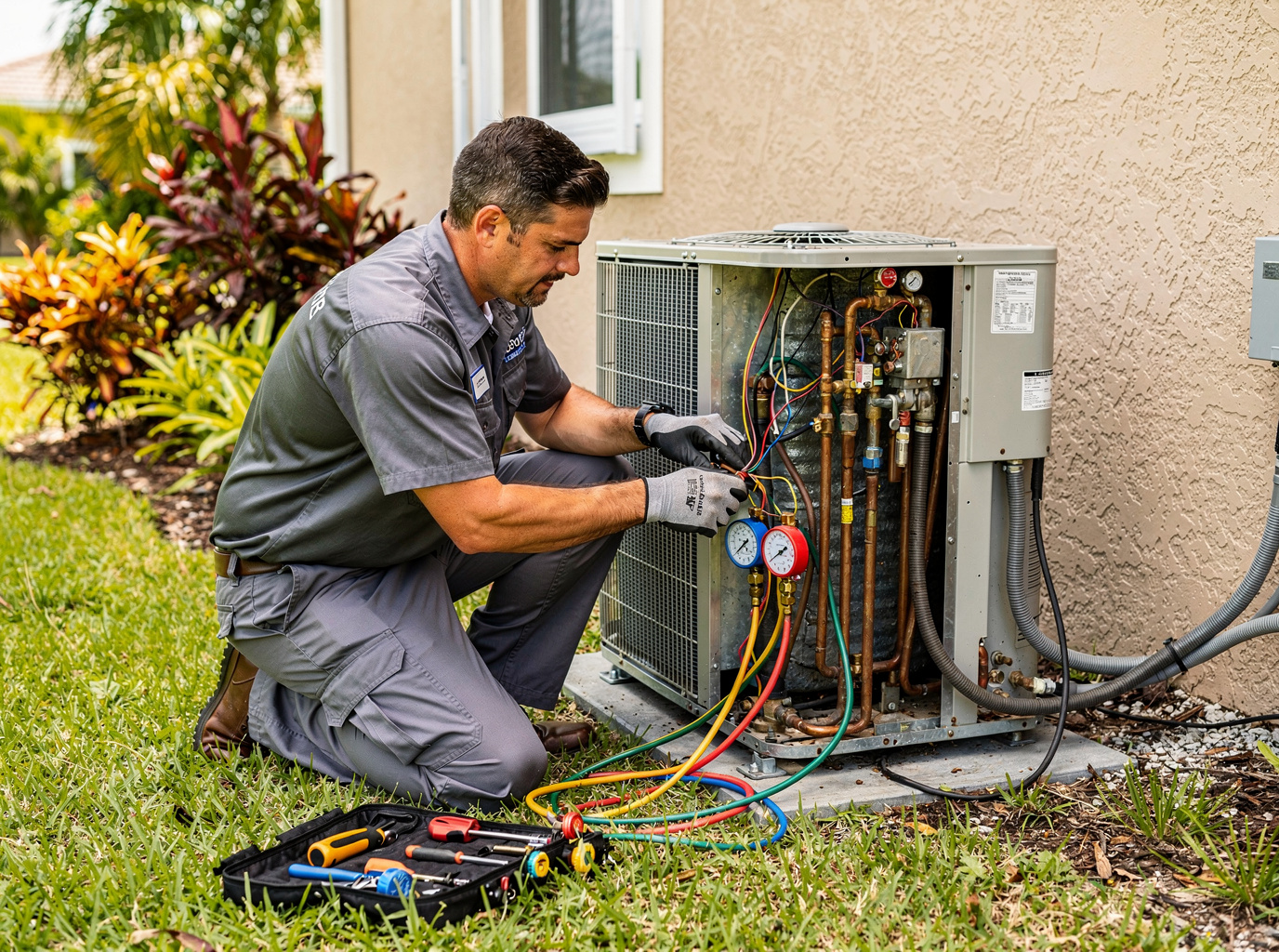
Air Conditioning Maintenance
AC maintenance is the scheduled inspection, cleaning and adjustment visit that keeps a cooling system running the way it was designed to run. A technician reviews the outdoor condenser, the indoor air handler, the coils, the condensate drain, the electrical components, the refrigerant-side readings, the airflow and the thermostat controls as one connected system. The goal is to catch wear while it is still correctable early, before a small weakness becomes a failed part in the middle of August. Maintenance is different from repair. A repair responds to a breakdown that has already happened. A maintenance visit looks for the conditions that lead to breakdowns: dirty coils that reduce heat transfer, a drain line starting to clog, a capacitor that has aged, a filter that restricts airflow, or a thermostat that cycles the system in a way that wastes runtime. Each of these is easier to correct when it is found early. Tampa changes the calendar. Tampa International Airport's NOAA 1991–2020 climate normals show that a system here works hard for most of the year. The station averages 94.3 days a year with a high of 90°F or more. July averages a high of 91.0°F and a low of 76.6°F, and August averages 91.2°F and 76.8°F. These are not occasional spikes. They are the normal working conditions of the cooling season. A maintenance plan built on a northern heating calendar, with one visit each autumn, misses the load that actually stresses equipment here. Florida also has a long rainy season. June, July, August and September each average more than 6 inches of rain, and August is the wettest month at 9.03 inches. Humidity and rainfall load the condensate drain and the coil surfaces, so maintenance here pays close attention to water as well as temperature. This page is for homeowners who want a scheduled visit that matches Tampa's duty cycle. It is written for anyone with a central air conditioning system, a split system or a heat pump that cools through the summer, including homes in Tampa and the surrounding communities the business serves. Service for Tampa homes is described on the Tampa service area page. If the system is already failing, the right page is the repair page. If a change-out is being considered, the right page is the installation page. For a tune-up that keeps a healthy system healthy, call Prime Florida HVAC to arrange the visit.
Learn more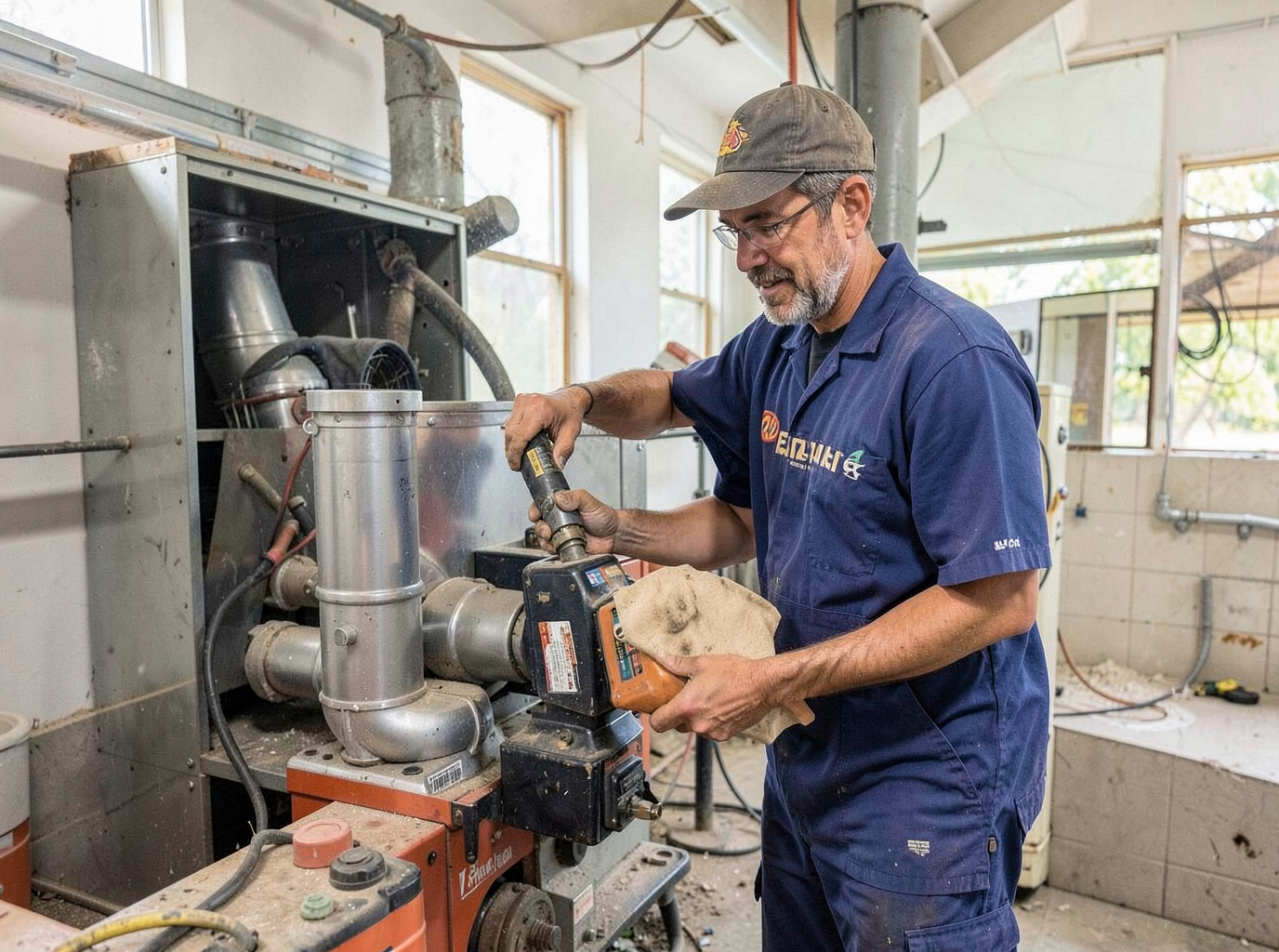
Heating Repair
Heating repair is the diagnosis-led correction of a home heating system that no longer heats. The work starts by finding out why heat is not reaching the rooms, then corrects that specific fault, then confirms the system heats properly again. It is not a parts swap guessed from the symptom alone. In Florida, heating repair covers three real configurations. The first and most common pattern is the heat pump, a cooling system that can reverse its refrigerant flow to move heat into the home. The second is a heat pump paired with auxiliary electric heat strips, which add heat on the coldest nights and during defrost. The third is a standalone electric furnace or gas furnace, which some Florida homes still have. Each configuration fails in different places, so the first question is always which one the home has. The visit's scope spans all three system types found in Florida homes: heat pumps, electric furnaces with auxiliary heat strips, and the gas furnaces in some homes. In process terms, heat pumps make up the largest share of the heating calls this process is built around. The repair visit is the same fault-finding process whichever system the home runs: diagnose the fault, explain it, repair the failed part and verify the system heats. Electric furnaces and heat strips are tested at their elements and sequencers, and gas furnaces at their ignition and safety controls. Florida's heating season is short. The NOAA 1991–2020 normals for Tampa International Airport show a January average high of 71.3°F and a January average low of 52.8°F. The average first night below 60°F falls on October 19, according to NWS Tampa Bay. That is a mild marker, not a cold-weather threshold, and it means the heating side of a system may sit unused for months. That short season is exactly why heating faults hide. A heat pump that cooled the house all summer may have a defrost board, sensor or reversing valve problem that never showed up in July. The fault stays quiet until the first cool night, when heat is called for and nothing responds. Heating repair is the work that finds the fault, explains it and corrects it. This page is written for Florida homeowners whose heat has stopped, is weak, or behaves oddly, and for anyone who wants to understand what a heating visit involves. Tampa homeowners can find local service information for Tampa. To start a visit, call Prime Florida HVAC to describe what the system is doing.
Learn more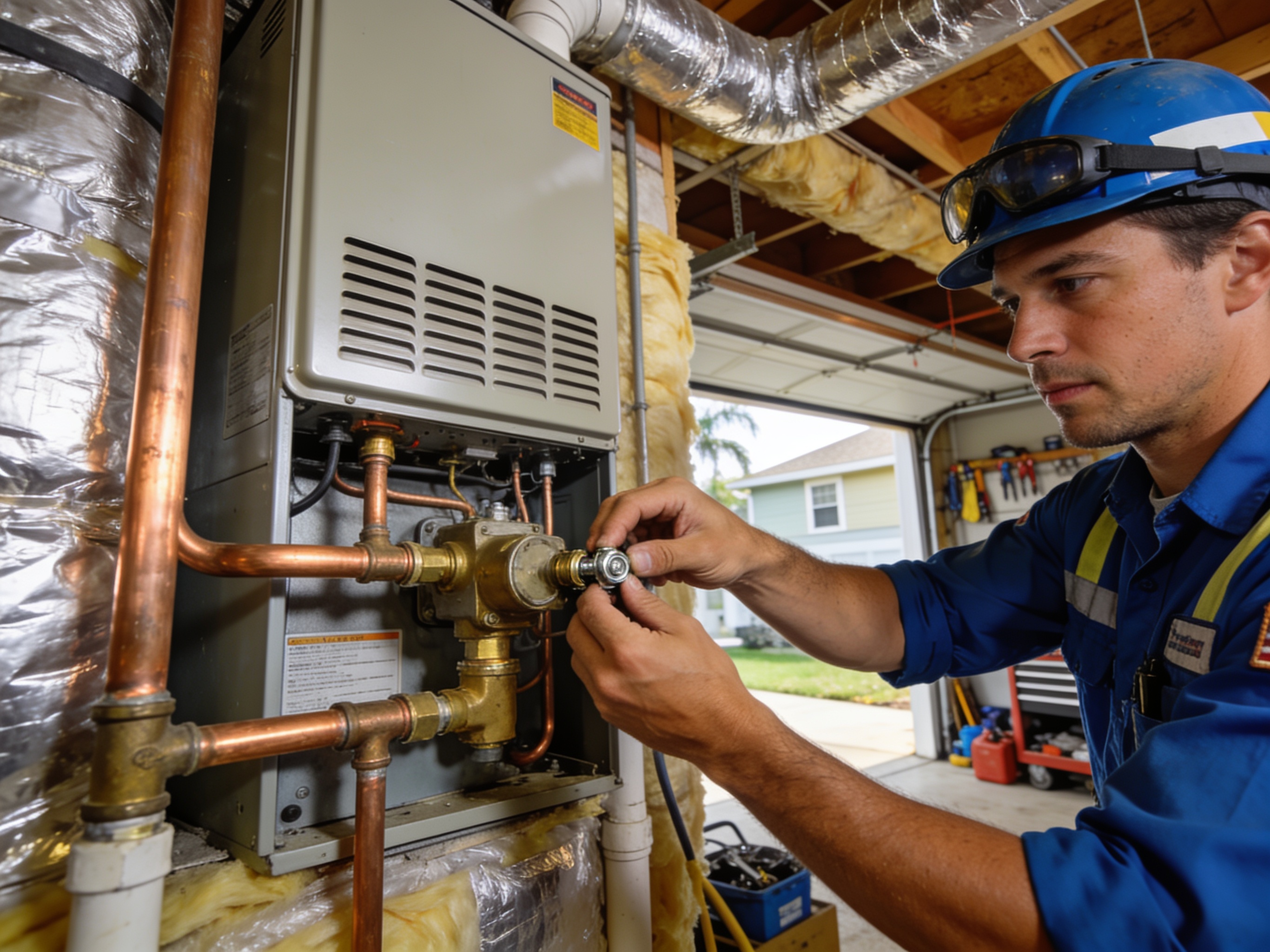
Heating Installation
Heating installation means putting in new heating equipment, or replacing existing heating equipment, so a home has a dependable source of heat. In Florida that decision is rarely made on its own. The equipment that heats a Tampa home is usually the heating function of a heat pump, or the heating half of a combined heating and cooling system that also runs the air conditioning. A standalone electric or gas furnace can also do the heating alone, depending on how the home is built and what equipment it already has. Both routes are real, and the right one depends on the house, not on a rule of thumb. A proper heating installation starts with an assessment of what is already in place. That means the existing equipment, the condition and layout of the ductwork, the electrical capacity available for auxiliary heat, and the home's real heating requirement. Florida's heating season is short, so the requirement is worked out from the building and how it is used, not from the length of the winter. Equipment selection follows the assessment. Tampa's January average low is 52.8°F and its January average high is 71.3°F, based on NOAA NCEI 1991–2020 normals for Tampa International Airport. The heating load is real but modest, and it arrives in short cold spells. A system sized only for those spells is not the right answer, because the same equipment has to cool the home for most of the year. That is why heating is usually specified together with cooling. The install covers setting the equipment, connecting it to the existing or corrected ductwork, wiring the controls, and wiring and testing any auxiliary heat. Commissioning follows. The system runs through a full heating cycle, the controls are checked for changeover between heating and cooling, and on heat pumps the defrost behaviour is verified. Commissioning is what turns connected parts into a system that is ready for the first cold night. Permits and inspection are part of the job in Tampa. A heating change-out on a combined system follows the same City of Tampa change-out route as an air conditioner change-out. In unincorporated Hillsborough County, the work runs through Hillsborough County Development Services. Permitted work must be inspected and receive final inspection approval. Section 5 sets out the route in detail. This page is for Florida homeowners who need heat now or are planning ahead for it, whether the home is in Tampa or a nearby community. It is also for homeowners weighing a heat pump against a standalone furnace who want the reasoning before they choose. To have the decision explained for your home, call Prime Florida HVAC and describe the house and the system you have now.
Learn more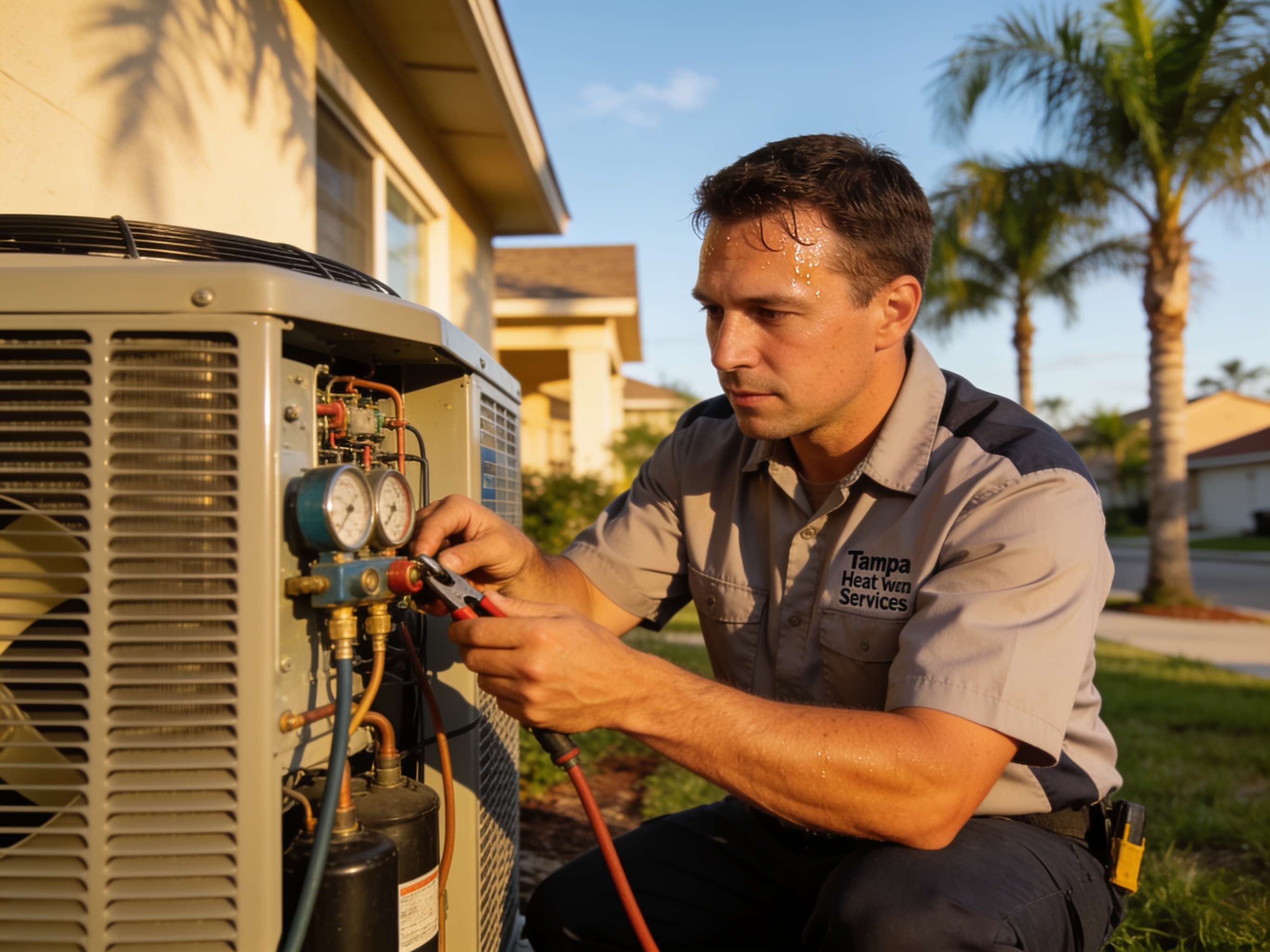
Heat Pump Services
A heat pump is one system that cools your home in summer and heats it in winter. It does both by reversing the flow of refrigerant between its indoor and outdoor coils. In cooling mode, it pulls heat out of the indoor air and releases it outside. In heating mode, the cycle runs the other way and moves heat from the outdoor air into the home. "Heat pump services" is the umbrella term for the work that keeps that system running. It covers repair when a part or condition fails, maintenance to catch problems early, and replacement when a unit has reached the end of its useful service or repair no longer makes sense. A heat pump has parts a plain air conditioner does not. The reversing valve sends refrigerant in the correct direction for each mode. The defrost control decides when the outdoor coil needs to clear frost during heating. Auxiliary heat, usually electric heat strips inside the air handler, supplements the system on the coldest nights and during defrost. Each of these parts can fail on its own, and each failure shows up differently. That is why heat pump work needs diagnosis in both modes, not only a check of the cooling side. Why a heat pump suits Tampa is a matter of configuration and climate. The NOAA 1991–2020 normals for Tampa International Airport show a July average high of 91.0°F and an average of 94.3 days a year at 90°F or more. The heating season is shorter by comparison. The January average low is 52.8°F, and the average first night below 60°F arrives around October 19. Because Tampa's cooling season is so long, a system that does both jobs in one unit spends much of its working year on cooling, which is the job Tampa homes need most. It still covers the cooler nights when they arrive. Calling this the natural configuration for Tampa is reasoning about the equipment and the climate, not a statistic about how many homes use one. This page serves homeowners whose heat pump is not performing in one or both modes, owners weighing whether a repair is worth doing, and anyone who wants to understand what heat pump work involves before it starts. If your system is blowing warm air when it should cool, or cool air when it should heat, call Prime Florida HVAC to describe what the system is doing so the visit can focus on the right symptoms.
Learn more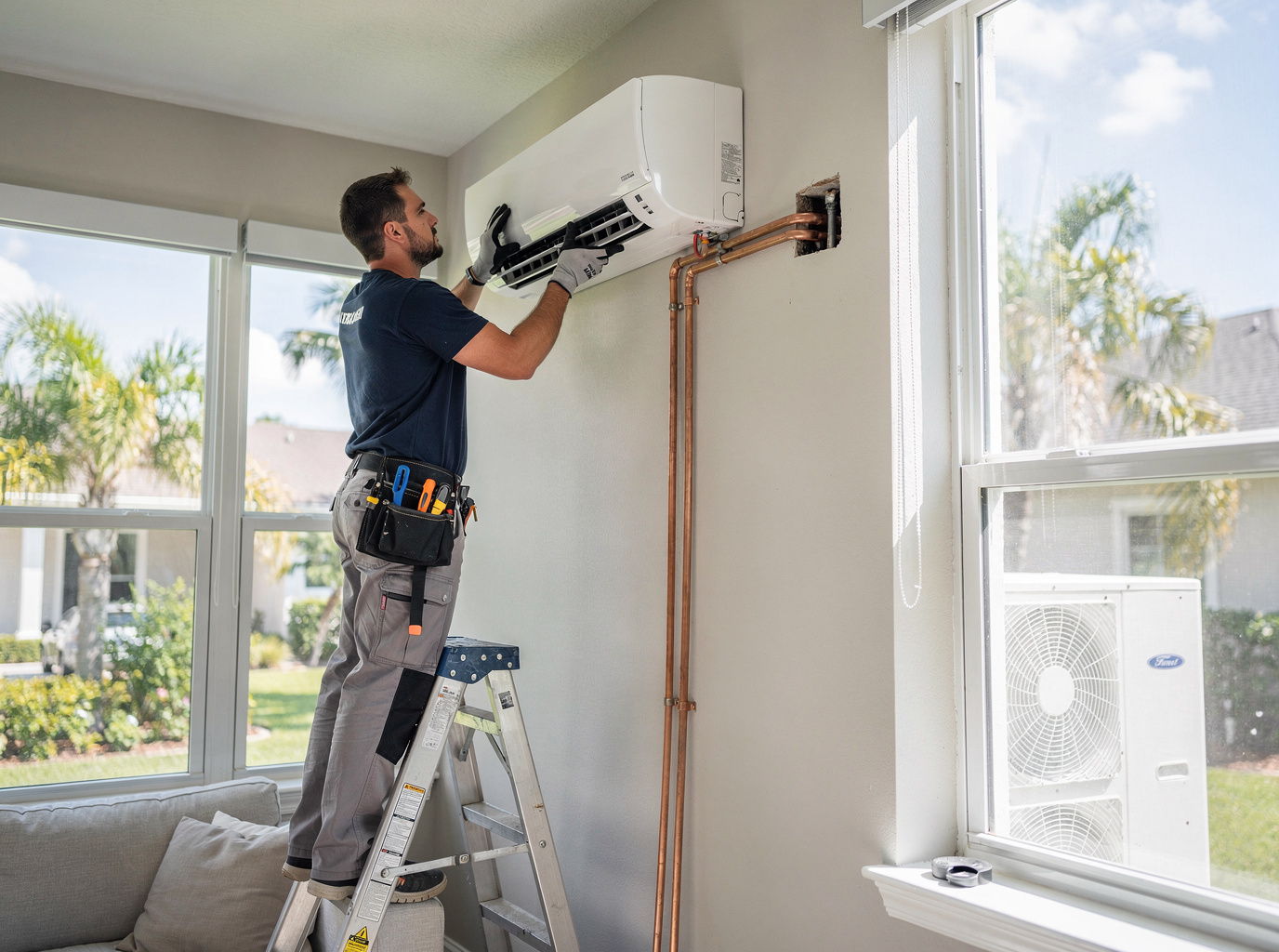
Ductless Mini-Split Systems
A ductless mini-split system pairs one outdoor unit with one or more indoor heads mounted on a wall or ceiling. The outdoor unit connects to each head through a line set, a small bundle of refrigerant lines, condensate drain and power that runs through a small opening in the wall. There is no ductwork. Each head conditions the zone it sits in, so one outdoor unit can serve a single room or several, depending on the design. That architecture wins in specific Tampa homes. Additions often have no duct runs because the ducts were never extended to the new space. Garage conversions and sunrooms are common cases where the central system never reached. Florida sunrooms are a familiar space type, often with glass on several sides and long afternoons of direct sun. Older homes were sometimes built without ducts, and adding them later can be impractical once walls and finishes are in place. A detached workshop or an office over a garage can also be served without a new duct system. Because each head works on its own zone, a hot room does not force the rest of the house to run harder. Tampa makes humidity part of the job. Temperature is only half of comfort in these spaces. The NOAA 1991-2020 normals for Tampa International Airport show June through September each averaging more than 6 inches of rain, with August the wettest month at 9.03 inches. A ductless head cools the air it handles and removes moisture from it as it does so. Florida homes run their cooling for much of the year, so how the system handles moisture matters every day. That means drainage and humidity control belong in the design from the first visit, not in the cleanup afterward. Sizing and head placement follow an assessment of the actual room, not a generic rule of thumb. The typical starting point is a space the central system does not reach well — one room that stays hot after the rest of the house is comfortable. This page serves Tampa homeowners who have a space the central system does not reach well, and owners of an existing ductless system who need service on it. If a whole home needs conditioning and its ducts are sound, a central system is usually the straighter answer, and the next section explains when. Call Prime Florida HVAC to describe the space and find out whether a ductless system fits it.
Learn more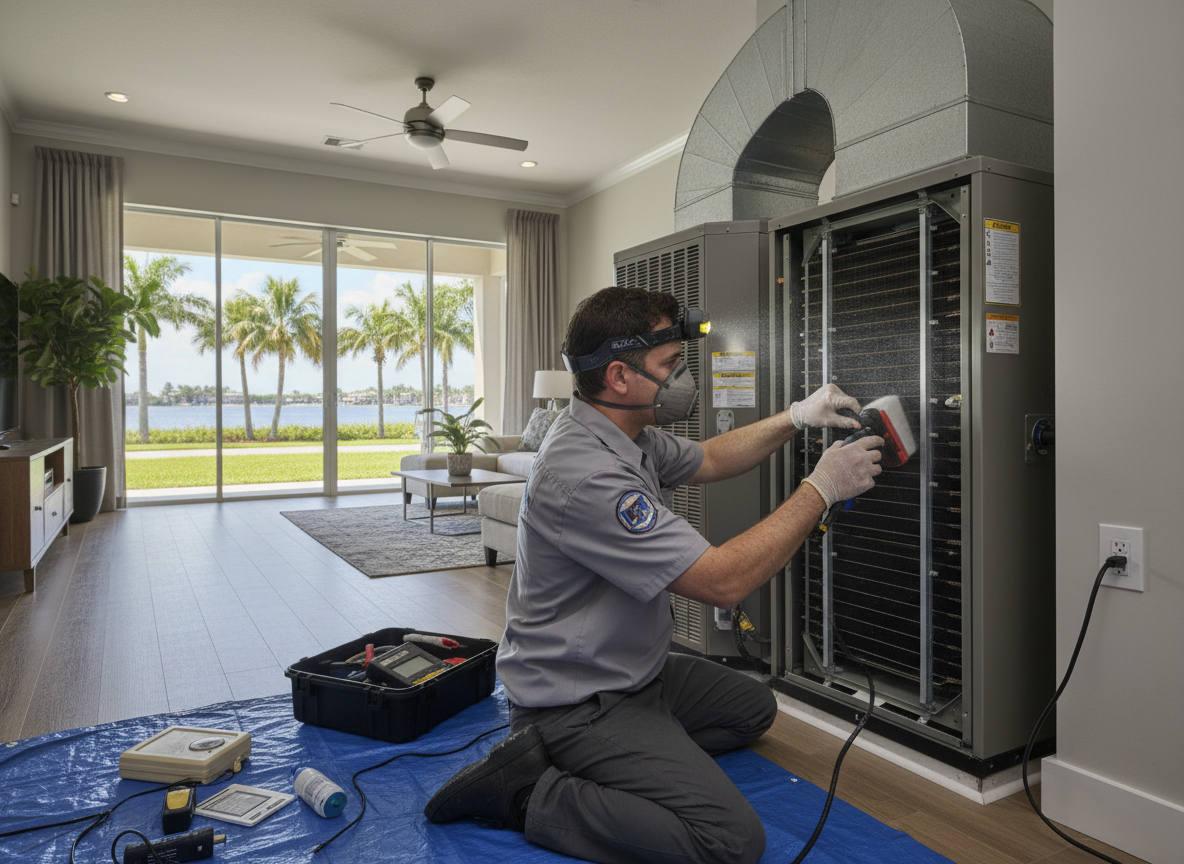
Indoor Air Quality Services
Indoor air quality services assess and improve two things in a home: what the air system carries through the rooms, and how humid the indoor air stays. The work uses three levers: filtration upgrades, whole-home dehumidification, and ventilation. Each one is fitted to the heating and cooling system the home already has, so the equipment works with the air handler and its controls rather than beside them. Florida makes this a system question rather than a seasonal one. The NOAA National Centers for Environmental Information (NCEI) 1991 to 2020 normals for Tampa International Airport show an average of 94.3 days a year at 90°F or more. June through September each average more than 6 inches of rain, and August is the wettest month, at 9.03 inches. For a home in this climate, humidity handling and filtration are a system question rather than an add-on. A long cooling season means the air handler runs for much of the year, so its filter, coil and controls set the moisture and dust load the rooms see every day. Heat and wet weather arrive together, so the plan must address both. The assessment-first approach starts by measuring how the home actually behaves across a day, so the homeowner gets a plan built around that house rather than a catalogue of equipment. In that climate, windows stay shut against the heat for most of the year. The home's air is conditioned, filtered and dehumidified by the same system, so the quality of the indoor air is largely the quality of that system's filtration and humidity handling. Opening a window is not a practical way to refresh the air for most of the year in Tampa. This page serves homeowners in Tampa and the six nearby areas within 20 miles who want their air system checked for filtration, humidity and ventilation, and who want changes that match the equipment they already have. It also serves homeowners whose system runs without trouble but leaves the house feeling damp, stuffy or sticky at the set temperature. The service covers equipment and assessment. It does not include testing for or removing growth inside a home. Where moisture is the problem, controlling that moisture is the HVAC contribution, and any visible growth is work for a remediation specialist. Call Prime Florida HVAC to talk through how the home's air system is set up and how the indoor air feels day to day.
Learn more